Maritime career guides
Expert guides for seafarers — certificates, ranks, salaries and how to build a career at sea.

Working on fishing vessels: jobs, documents, pay by share and what to check before you go
Fishing is a world of its own at sea. The vessels are different, the rules are different — STCW, the convention that governs merchant…

Becoming a seafarer after 30 (or 40): is it too late, and where to start
"Is it too late?" is the question behind thousands of searches every month — from mechanics, electricians, cooks, drivers and office…

Working on a yacht without experience: deckhand and stewardess jobs, documents and how to start
Superyachts — private and charter yachts of 24 metres and more — employ tens of thousands of crew worldwide, and the entry jobs, deckhand…

How to become a seafarer without a maritime education
Most seafarers come to sea through a maritime academy or college — but not all of them, and not every job at sea needs one. Ratings on deck…

Wiper on a ship: the first job in the engine room and how to get it
The wiper is the entry rank in the engine room — the engine department's equivalent of the ordinary seaman on deck. The name comes from the…

Fitter on a ship: welding, machining, documents and how to get hired
The fitter is the engine department's craftsman: welding, cutting, machining on the lathe, making the part that is not on board and…

Ship's electrician: duties, the STCW certificate and how it differs from the ETO
The ship's electrician — in STCW terms the electro-technical rating — maintains and repairs the electrical equipment on board under the…

Electro-technical officer (ETO) on a ship: duties, certificate and how to get hired
The electro-technical officer (ETO) looks after everything on board that runs on electricity and electronics: generators and switchboards,…

Fourth engineer on a ship: the first engineer officer's job and how to get it
The fourth engineer — also called junior engineer or assistant engineer — is the first officer's rank an engine cadet reaches: the moment…

Third engineer on a ship: duties, watch, requirements and promotion
The third engineer keeps the ship's electricity flowing. On most ships the generators and their engines are the third engineer's machines,…

Second engineer on a ship: duties, requirements and the step to chief
The second engineer — "second" in the engine room — runs the engine department day to day and is the chief engineer's deputy. If the chief…

Chief engineer on a ship: duties, requirements and how to become one
The chief engineer — "chief" in the engine room, "C/E" on the crew list — heads the engine department and answers for every machine on…

Ship's cook: duties, required certificates and how to get a job at sea
The ship's cook — chief cook on larger crews — feeds twenty people three times a day for months, far from any shop. On a long contract the…

Ordinary seaman (OS): how to start at sea without experience
The ordinary seaman (OS) is the entry rank on deck — the job most people mean when they search for "work at sea without experience". It…

Able seaman (AB): duties, the STCW certificate and how to get hired
The able seaman (AB) is the backbone of the deck crew: on watch at the wheel and on lookout, on day work keeping the ship in shape, and at…

Bosun on a ship: duties, requirements and how to become one
The bosun (boatswain) is the senior rating on deck — the foreman between the chief officer and the deck crew. The chief officer decides…

Third officer on a ship: duties, the first officer's certificate and the first contract
The third officer is the first officer's rank a deck cadet reaches — the moment you stand a bridge watch on your own. It is also the rank…

Second officer on a ship: duties, watch, requirements and promotion
The second officer is the ship's navigating officer. Every passage the ship makes starts on their chart table — or, today, on their ECDIS.…

Chief officer (chief mate): duties, requirements and the step to master
The chief officer — chief mate, or simply "chief" on deck — is second in command after the master and the head of the deck department. If…

Ship's master (captain): duties, requirements and how to become one
The master — the captain — commands the ship. Everyone on board, every document and every decision that matters ends with them. It is the…

The crewing agency interview: common questions and how to answer them
Between your CV and a contract there is almost always a conversation with a crewing manager — in the office, by phone or on video, usually…

The CES test (Crew Evaluation System): what it checks and how to prepare
CES — Crew Evaluation System — is the computer test many ship managers use to check a seafarer's professional knowledge before a contract.…

The Marlins English test for seafarers: format, sections and how to prepare
Marlins is the English test crewing agencies ask for most often. It does not check maritime knowledge — it checks whether you will…

Morska Agencja Gdynia (MAG): crewing jobs for officers and ratings
Morska Agencja Gdynia (MAG) is one of the longest-running Polish maritime companies. It was founded in 1951 to represent foreign…

Polsteam (Polish Steamship Company): jobs on bulk carriers and how to join
Polska Żegluga Morska (PŻM), known as Polsteam, is a state-owned shipowner based in Szczecin specialising in bulk cargo. Unlike a crewing…

Polaris Maritime Services (Szczecin): crewing for merchant and offshore fleets
Polaris Maritime Services is one of the oldest Polish crewing agencies. It has worked since 1991, is based in Szczecin, and has had a…

WRS (Worldwide Recruitment Solutions): offshore and marine jobs and how to apply
Worldwide Recruitment Solutions — usually just WRS — is a recruitment and crew-management company for the offshore energy and marine…

Steward and stewardess jobs offshore: catering crew on vessels and platforms
Offshore vessels and accommodation units often carry many more people than a merchant ship: technicians, divers, surveyors and client staff…

Oiler and motorman jobs offshore: duties, certificates and how to get hired
The oiler — on many ships called the motorman — is the engine-room rating who keeps machinery running between the engineers' checks.…

How to get into offshore: certificates, vessels and the first contract
Offshore means ships and units that serve the oil, gas and wind industries at sea. Many seafarers move there for the rotations — often…

Seafarer jobs in Poland: officers of the watch, ETOs and able seamen
Polish seafarers, and seafarers from neighbouring countries, look for work through Polish agencies for several reasons: offices close by in…

DP operator course: steps, sea time and where to train
A DP operator (DPO) runs the dynamic positioning system — the computer that holds a vessel in position or on a set track without an anchor.…

Crewing agencies in Poland: how to choose one and check it is legal
Poland is one of Europe's largest crewing centres. Dozens of agencies in Gdynia, Gdańsk and Szczecin recruit seafarers for merchant,…

TOS (Transport & Offshore Services): offshore and maritime jobs and how to apply
TOS — Transport & Offshore Services — is a maritime and energy staffing company based in Rotterdam and working since 1992. It places…

OSM Thome crewing: jobs for seafarers and how to apply
OSM Thome is one of the largest crew and ship managers in the world, formed by the merger of Norway's OSM Maritime and Singapore's Thome…

Wilhelmsen jobs for seafarers: the Polish manning office and how to apply
Wilhelmsen is a Norwegian maritime group with a long history, and its ship management arm, Wilhelmsen Ship Management, manages and crews…

CMA CGM jobs for seafarers: how to get on the group's ships
CMA CGM, based in Marseille, is one of the three largest container lines in the world. Its ships range from feeders to some of the largest…

BSM (Bernhard Schulte Shipmanagement): jobs at sea and how to apply
Bernhard Schulte Shipmanagement (BSM) is one of the largest ship managers in the world and part of the German Schulte Group. It does not…

Cadet on a gas carrier or tanker (LNG deck cadet): requirements and how to get there
Gas carriers and tankers are among the best-paid ships in the merchant fleet, and the companies that run them prefer to train their…

Electrical cadet (ETO cadet): how to start a career as an electro-technical officer
The electro-technical officer (ETO) looks after everything on board that runs on electricity and electronics: generators and switchboards,…

Deck or engine cadet: which department to choose
Every future officer chooses a side early: the bridge or the engine room. The choice decides your daily work, your certificates and, later,…

Engine cadet jobs: requirements, sea time and how to get the first contract
An engine cadet is a future marine engineer doing the sea service needed for the first engineering certificate. The engine room is loud,…

Deck cadet jobs: how to find your first ship and what crewing agencies check
A deck cadet is a future navigating officer doing the sea service that a certificate of competency requires. It is the hardest contract of…
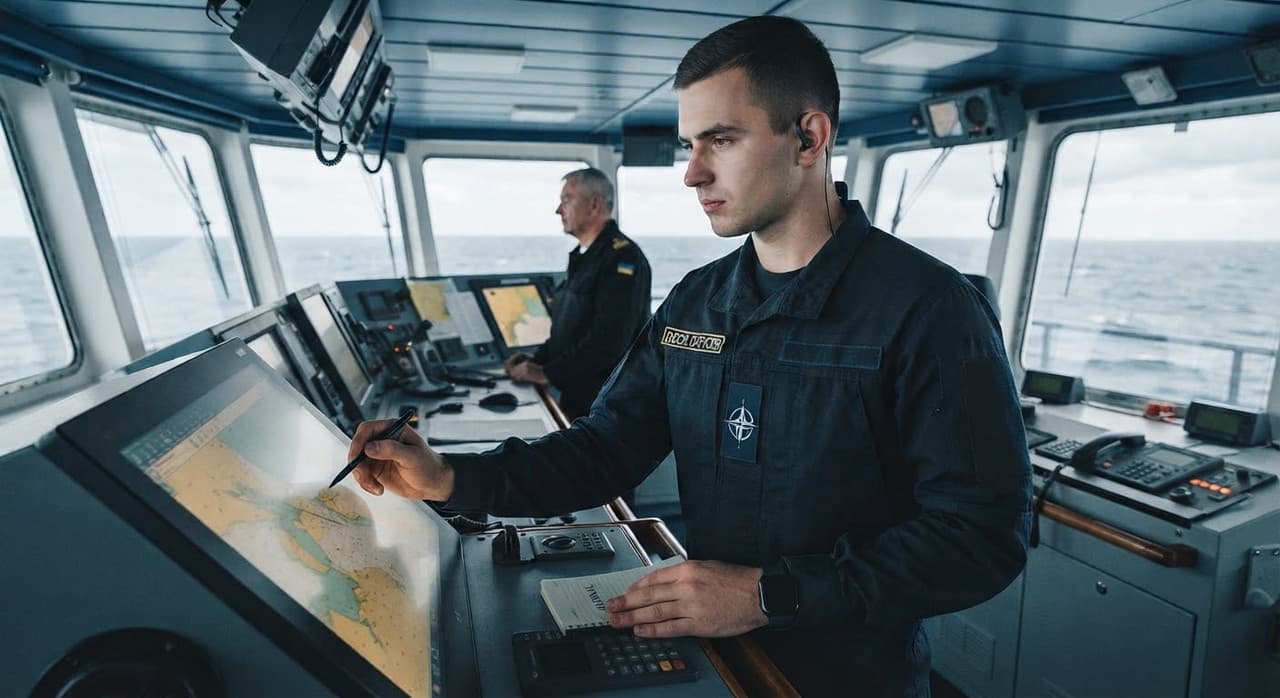
Your first cadet contract: everyone has the diploma, not everyone has the sea time
There's something the academy doesn't tell you straight, and should, in the first year. The diploma is not the problem. Everyone who sits…

Mental health and wellbeing at sea: staying healthy on long contracts
Life at sea is rewarding, but it is demanding: long contracts, time away from family, fatigue and isolation all take a toll. Looking after…

Life after sea: shore-based maritime careers for former seafarers
Sea time is one of the most valuable assets in the maritime industry — and it does not only pay off at sea. Sooner or later many seafarers…

Money management for seafarers: allotments, tax and saving your salary
A sea salary is good money — but it arrives in bursts, in foreign currency, while you are away from home for months. Managing it well is…

Crew change explained: signing on and off, flights and joining agents
Every contract begins with a sign-on — joining the ship — and ends with a sign-off — leaving it. Between those two moments sits a chain of…

The seafarer medical certificate (ENG1): how to pass and what can fail you
Every seafarer needs a valid medical certificate before joining a ship. It confirms you are fit for the physical demands of life on board…
The engine department explained: from wiper to chief engineer
The engine department keeps a ship alive — propulsion, power, fuel, fresh water and every system on board. If you are mechanically minded,…

Working on cruise ships: departments, life and how to get hired
Cruise ships are floating towns, and they need three very different kinds of crew: the mariners who run the ship, the technical teams who…

Understanding your seafarer contract: salary, overtime, leave and MLC rights
A job offer at sea is only as good as its contract. Two offers with the same headline salary can be very different once you read the…

Maritime English and SMCP: why it matters and how to improve
On an international crew, English is the working language of the ship. It is how the bridge talks to the engine room, how you coordinate…

Dynamic Positioning (DP): careers and how to become a DPO
Dynamic Positioning is the technology that lets a vessel hold its exact position and heading automatically, using thrusters and computer…

Documents and visas every seafarer needs
A ready seafarer is one whose papers are complete and valid. Many contracts are lost at the last minute because a single document has…

How to choose a reliable crewing agency
The agency you sail through shapes your whole career — timely joining, correct wages, and support if something goes wrong. Choosing well is…

Life on board: contracts, rotations and daily routine
For anyone new to the sea, the biggest unknown is not the work itself but the rhythm of life on board. Understanding contracts, rotations…

Tanker, bulk or offshore: choosing the right fleet
The type of vessel you work on shapes your pay, your certificates and your daily work. Many seafarers build a whole career in one segment.…

Getting your first contract: a guide for cadets and juniors
The hardest contract to get is your first one — everyone wants experience, and you are trying to earn it. The good news: with an officer…

Maritime career path: from cadet to captain
A career at sea is one of the few where a motivated person can climb from an entry-level trainee to command of a multi-million-dollar…

STCW and seafarer certificates explained
Before a crewing manager will consider you, your certificates have to be in order. For newcomers the alphabet soup — STCW, CoC, GMDSS, BST…

How much do seafarers earn? Salaries by rank and vessel type
"How much does the job pay?" is the first question every seafarer asks — and too often the answer is a vague "negotiable". This guide…

How to avoid crewing scams: never pay to get a job at sea
Where there are seafarers looking for contracts, there are scammers pretending to be crewing agencies. The scam is almost always the same:…

How to write a maritime CV that gets you hired
A crewing manager may open dozens of CVs for a single vacancy. Yours has a few seconds to show that you are qualified, available and easy…

How to Write a Seafarer CV That Gets You Hired
A crewing manager spends seconds on each CV. Yours has to show the essentials instantly: your rank, your certificates and your sea service.…

How to Get Your First Maritime Job Without Experience
Landing your first ship without sea time feels impossible — every vacancy seems to ask for experience. It isn't impossible. Thousands of…

Seafarer Salaries 2026: What Different Ranks and Vessels Really Pay
How much do seafarers earn? It depends on your rank, the type of vessel, the company and the trading area. Below is a realistic overview of…

STCW Certificates Explained: What Every Seafarer Needs in 2026
The STCW Convention — Standards of Training, Certification and Watchkeeping — is the international rulebook that decides who is allowed to…